
Cotton Terminology, Cultural Economy, and Political Communication in Zoroastrian-Iranian Networks
Talk by Azadeh Pashootanizadeh on the study of Shah Jahan Trading House (1900–1913).
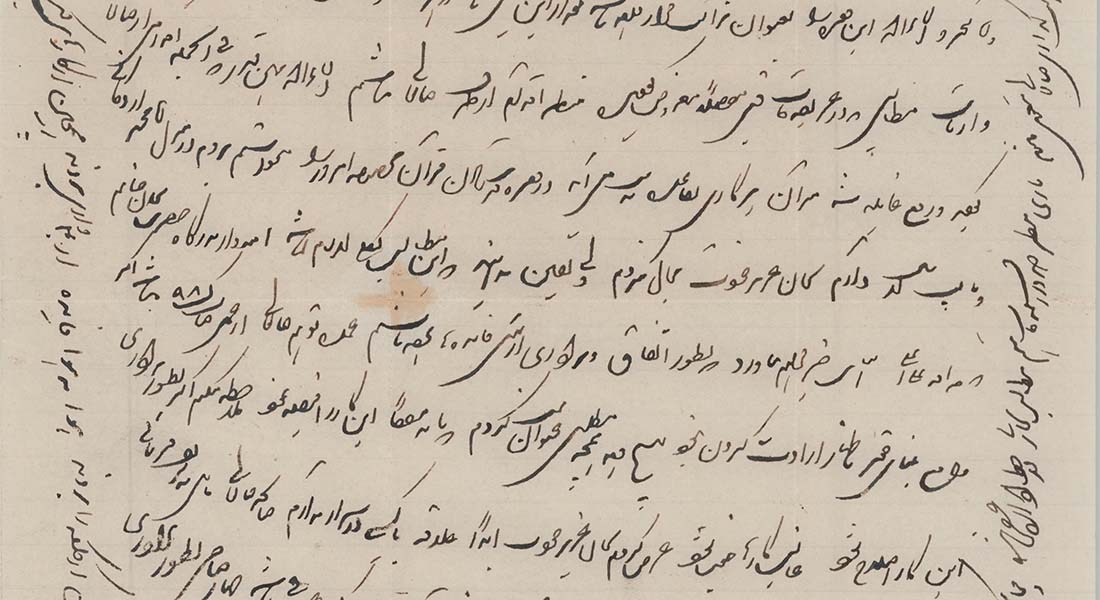 This study examines the Shah Jahan Trading House (1900–1913), a Zoroastrian commercial enterprise primarily engaged in the cotton trade. Cotton functioned not only as a significant indigenous Iranian commodity embedded in everyday material culture and local economies but also as a ritual material within Zoroastrian religious life, particularly in the production of sacred garments such as the sudreh.

Drawing on surviving commercial records – including invoices, telegrams, bills of lading, and correspondence – the project demonstrates how cotton shipments were, during certain phases of the Constitutional Revolution (1905–1911), used as covert channels for the transportation of weapons and ammunition destined for constitutionalist forces.
In addition, the study highlights the emergence of a specialised cotton-related commercial terminology that constituted a coded linguistic system. This system was designed to prevent non-Zoroastrian actors from discerning the nature of shipments and to ensure that consignments remained exclusively managed within Zoroastrian mercantile networks. Notably, elements of this terminology continue to be used, in adapted forms, within contemporary cotton trading practices across parts of Asia.
Map of South Campus
View directions.
View on map of the Faculty of Humanities - South Campus.
View map of South Campus (pdf).