
Enlivening ovine heritage: Caring for North Ronaldsay’s seaweed-eating sheep
Lecture by Margaréta Pintér, PhD fellow, Saxo Institute, Archaeology and The Center for Sustainable Futures.
Abstract
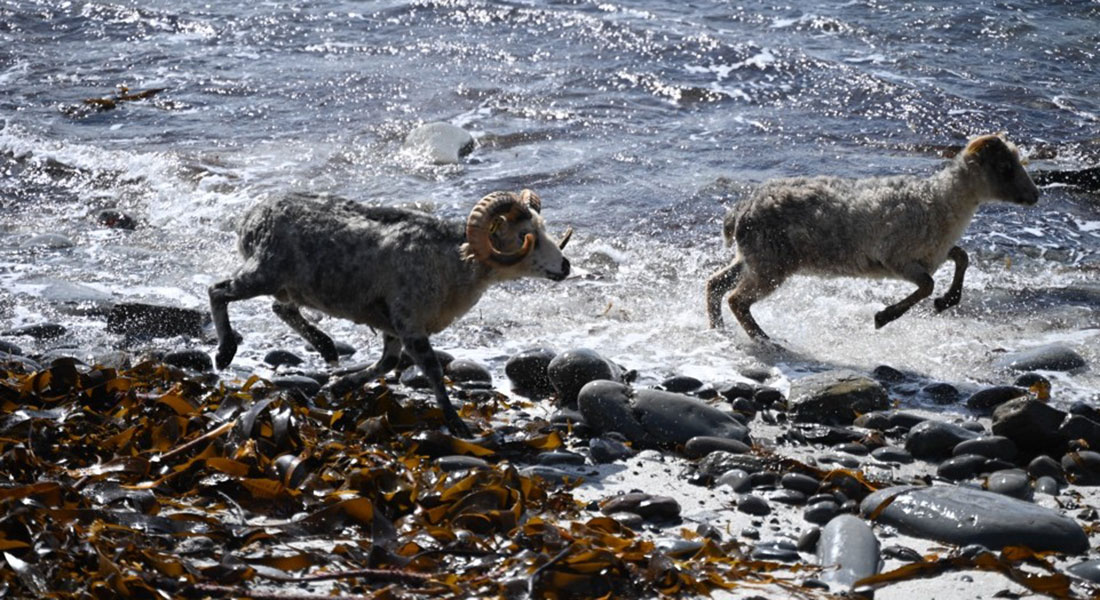
The small North Atlantic island of North Ronaldsay (Orkney) is perhaps best known for its seaweed-eating sheep breed, a heritage breed eponymous to the island itself.
Since 1832, which saw the drastic reorganisation of the landscape by way of an island-encircling drystone wall, native North Ronaldsay sheep have been sequestered to the rocky foreshore, a change in habitat that has driven a rapid evolutionary adaptation to a diet of almost exclusively seaweed. Over time, these sheep have adapted so well to their oceanic fodder that they are now prone to developing copper toxicosis when they gain sustained access to terrestrial herbage.
In this presentation, I aim to complicate the notion of care in the context of a long-standing interspecies relationship and examine the process of mutual care as a necessary, yet deeply fraught component of biocultural co-evolution. First, I read this breed’s evolutionary trajectory together with the social history of the island in order to understand the changing cultural value of these sheep over time. Then, in an ethnography of sheep-keeping practices, I tease out some of the complex interspecies negotiations that are stimulated by an ongoing commitment to care for heritage that lives.
Map of South Campus
View directions.
View on map of the Faculty of Humanities - South Campus.
View map of South Campus (pdf).